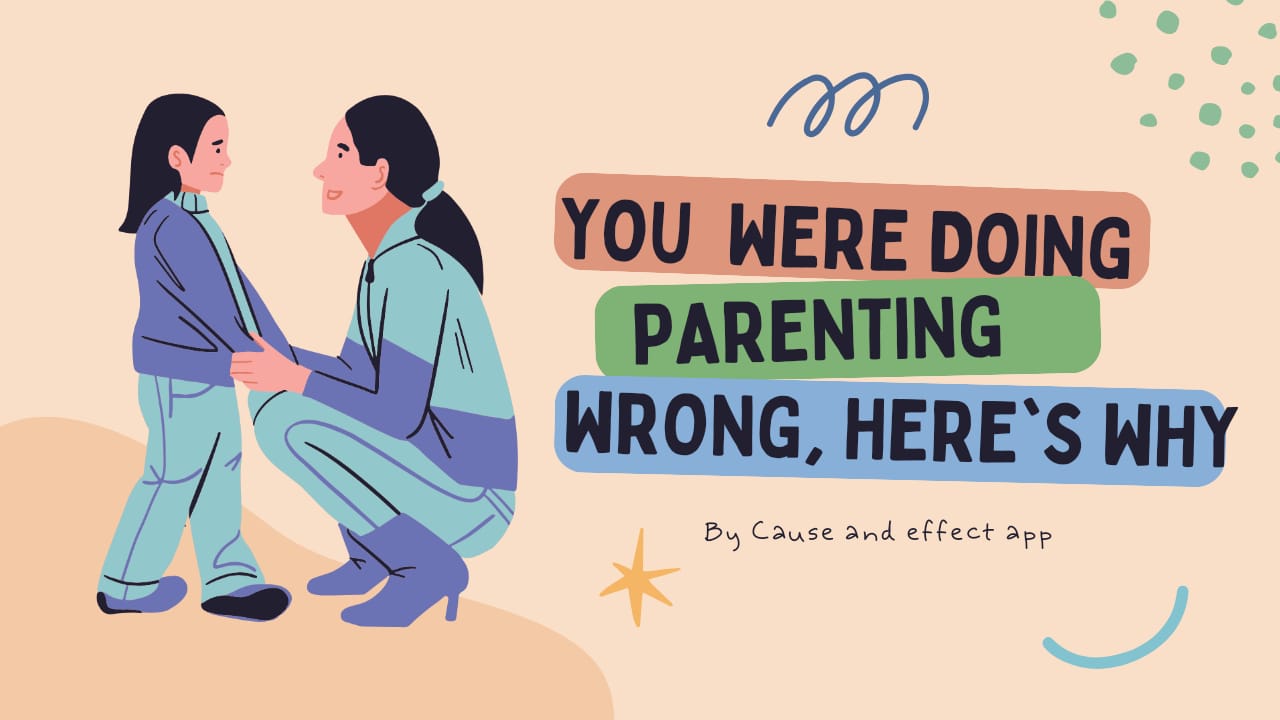
You Were Doing Parenting Wrong from the Beginning—Here’s Why

Parenting is one of the most rewarding yet challenging roles we’ll ever take on. It comes with no manual, and most of us navigate through it using intuition, cultural norms, and advice from family and friends. But what if we’ve been getting some fundamental aspects of parenting wrong all along? Let’s explore the common pitfalls parents face and how modern strategies, rooted in science and technology, can help us course-correct.


1. Over-Scheduling Your Child

Modern parenting often equates success with busyness. From piano lessons to soccer practice, parents strive to give their kids every opportunity to excel. However, this overload can lead to burnout—not just for parents, but for children as well.

Why It’s Wrong
Over-scheduling can stifle creativity, increase stress, and rob children of free, unstructured playtime—a critical component of their development.

The Fix
Strike a balance by prioritizing activities your child truly enjoys. Encourage unscheduled time to foster creativity and independent thinking. Apps like Cause and Effect allow parents to create healthy schedules that balance tasks and free time, ensuring a holistic approach to their child’s day.


2. Focusing on Compliance Instead of Understanding

Many parents unknowingly equate good behavior with obedience. While teaching rules is essential, a strict compliance-based approach can suppress emotional intelligence and self-awareness.

Why It’s Wrong
A focus on obedience alone doesn’t help kids understand why certain behaviors are preferred. It can lead to fear-based compliance rather than intrinsic motivation.

The Fix
Adopt a collaborative approach. Use open-ended questions to help kids think critically about their choices. Task-based systems, like those in Cause and Effect, teach kids responsibility while showing them the rewards of self-discipline and goal setting.


3. Not Allowing Failures

In an attempt to shield kids from pain, parents often swoop in to prevent mistakes. While this comes from a place of love, it deprives children of valuable life lessons.

Why It’s Wrong
Failure is a critical learning experience. It teaches resilience, problem-solving, and emotional regulation. Without it, children may struggle to handle adversity later in life.

The Fix
Encourage your child to take risks and learn from their mistakes. Use setbacks as teachable moments rather than occasions for punishment. For example, apps that track progress and provide rewards for consistent efforts (like the Cause and Effect app) can help children view mistakes as part of the learning process.


4. Ignoring Digital Literacy

In today’s tech-driven world, digital literacy is as important as traditional literacy. Many parents either avoid discussing technology altogether or set overly rigid boundaries.

Why It’s Wrong
Technology is here to stay. A lack of understanding can lead children to misuse it or fall prey to online dangers.

The Fix
Take an active role in teaching your child how to use technology responsibly. Tools like Cause and Effect help parents set limits, monitor usage, and foster healthy habits while encouraging safe digital exploration.


5. Forgetting to Lead by Example

Children are sponges, absorbing habits and behaviors from their parents. It’s easy to lecture about kindness, patience, and discipline while forgetting to model these values ourselves.

Why It’s Wrong
Kids learn more from what we do than what we say. A “do as I say, not as I do” approach can create confusion and erode trust.

The Fix
Practice what you preach. If you want your child to be patient, demonstrate patience in challenging situations. Using progress-tracking tools, parents can also model personal goal-setting and accountability alongside their kids.


The Way Forward

Parenting is an ever-evolving journey. Acknowledging and addressing past missteps isn’t about guilt—it’s about growth. By fostering open communication, embracing modern tools, and prioritizing balance, we can create an environment where both parents and children thrive.

If you’re ready to revolutionize the way you parent, start by embracing tools like the Cause and Effect parental control app. It’s designed to empower parents and children with the right tools to build healthier relationships, foster independence, and create lasting positive habits.

Remember: It’s never too late to start doing things right.
Why Environmental Education Matters for Kids?

Environmental education is the process in which students develop an appreciation for their natural environment and the responsibilities that come with being a citizen of the Earth. Environmental education is important for kids because they are the generation that will be living in a country with more extreme weather, more natural disasters, more air and water pollution, and poor quality of soil. It’s crucial that kids learn about these things now so they can take active roles in fighting against them. It is a vital part of education. It teaches children that our actions have consequences and can be life-changing, both good and bad. It teaches the importance of caring for the environment to ensure it’s health for future generations.

Environmental education is the process of teaching individuals to better understand and appreciate the natural environment. Environmental education is not just limited to natural environments, but it also includes human-created environments such as cities. Children are often a focus in environmental education because they are future generations, and their understanding and appreciation of the environment can make a difference in its preservation.


What is Environmental Education?

Environmental education is important for kids because it teaches them about the world around them and how to take care of it. It also helps them understand the importance of conserving natural resources and protecting wildlife.


The Importance of Environmental Education

As our world becomes increasingly more digital, it’s important that we don’t forget the importance of teaching our kids about the environment. Environmental education helps children understand the natural world and their place in it. It also teaches them how to be responsible stewards of our planet.

There are many benefits of environmental education, but one of the most important is that it can help instill a lifelong love of nature in children. When kids learn about the environment and how to care for it, they’re more likely to develop into adults who appreciate and respect the natural world.

Environmental education is also important for developing critical thinking skills. Kids who learn about environmental issues are better able to understand and analyze complex problems. This is a valuable skill that will serve them well throughout their lives.

Finally, environmental education can help kids feel connected to something larger than themselves. When they realize that they have the power to make positive changes in the world, they’ll be more motivated to do so.

We all have a responsibility to care for our planet, and environmental education is one of the best ways to ensure that future generations will be up to the task.


Why should Kids Learn about the Environment?

There are many reasons why environmental education is important for kids. First, it can help them understand and appreciate the world around them. It can also teach them how to care for the environment and how to make choices that will protect it. Additionally, environmental education can help kids develop a sense of responsibility for the planet and its resources. Finally, environmental education can raise awareness about important environmental issues and inspire kids to take action to make positive change.


How do Children help the Environment?

One of the most important things that children can do to help the environment is to learn about it. Environmental education helps kids understand how they can protect the planet and its natural resources. They learn about the importance of recycling, conserving energy, and reducing pollution.

Environmental education also teaches children about the interdependence of all living things. They learn that humans, animals, and plants all rely on each other for survival. This understanding can help children appreciate the value of biodiversity and the need to protect endangered species.

Most importantly, environmental education instills a sense of wonder and appreciation for the natural world. When children understand and value the environment, they are more likely to be future stewards of our planet.


Conclusion

Environmental education is important for kids for a number of reasons. It helps them understand the natural world and how they fit into it, teaches them about conservation and sustainability, and gives them the knowledge and skills they need to make informed decisions about the environment. In a world where the environment is under increasing pressure from human activity, it is more important than ever that we educate our children about how to protect and preserve our planet.

What You Need to Know About Kindergarten Social Awareness Skills

Social awareness skills are a critical developmental capacity that help children understand the perspectives of others, and the ability to take on other roles in life. In this article, you will learn how children develop social awareness and how to help them succeed socially.

Social awareness skills are a critical developmental capacity that help children understand the perspectives of others, and the ability to take on other roles in life.


The Importance of Social Skills

Kindergarten is an important time for children to develop social awareness skills. These skills will help them in their future academic and social interactions. Here are some things you should know about kindergarten social awareness skills:


What are social awareness skills?

Social awareness skills involve being able to understand and respond to the emotions of others. This includes being able to take other people’s perspectives, empathizing with others, and understanding social cues.


Why are social awareness skills important?

Social awareness skills are important because they help children in their academic and social interactions. For example, children who can take other people’s perspectives tend to do better in school, as they can better understand their classmates and teachers. Additionally, children who can empathize with others tend to have better relationships with their peers.


How can I help my child develop social awareness skills?

There are many ways you can help your child develop social awareness skills. One way is to provide opportunities for your child to practice taking other people’s perspectives. For example, you can ask your child questions such as “How do you think your friend feels about what you just said?” etc.


Why Social Skills Are Important

As your child enters kindergarten, they will be exposed to a whole new social world. It’s important to help them develop the skills they need to navigate this new environment. Social awareness skills are those that help your child understand and respond to the emotions and behaviors of others.


There are many reasons why social skills are important. First, they help your child make friends. Good social skills enable your child to communicate effectively, share ideas and play cooperatively. Additionally, social skills can help reduce stress and anxiety. When children feel confident in their ability to interact with others, they are more likely to enjoy school and feel successful.


There are a few key things you can do to help your child develop social awareness skills. First, provide opportunities for them to practice. This might include playdates with other children, attending parties or joining a sports team. You can also model social skills yourself and point out examples of good behavior when you see it. Finally, talk to your child about their feelings and experiences. This will help them develop empathy and understand the perspective of others.


Main Social Awareness Skills

When your child heads off to kindergarten, they will be embarking on a new and exciting adventure. Along with learning to read and write, they will also begin to develop their social awareness skills. These skills are important for your child to learn in order to interact successfully with their classmates and teachers. Here are some of the main social awareness skills that your child will be learning in kindergarten:


Listening and paying attention – In order to understand what others are saying, your child will need to learn to listen carefully and pay attention. This can be a challenge for some children, but with practice they will gradually improve their listening skills.


Taking turns and sharing – Kindergarten is often the first time that children are in a classroom setting where they have to share toys, materials, and attention with other kids. It’s important for them to learn how to take turns and share patiently so that everyone can enjoy the activity.


Cooperation and teamwork – Working together with others is an important skill that your child will need to learn in kindergarten. They may be asked to help clean up the classroom or participate in group activities such as singing or playing games.


Respecting personal space – As children begin


The Importance of Communication Skills in a Classroom Setting

It is essential for kindergarten teachers to possess strong communication skills. This is because they need to be able to effectively communicate with their students on a daily basis. In addition, they need to be able to build positive relationships with parents and other members of the school community. Good communication skills are essential for creating a positive learning environment in the classroom.

There are a number of ways in which teachers can improve their communication skills. One way is to participate in professional development opportunities that focus on this area. Another way is to take some time to reflect on their own communication style and how it might be improved. Lastly, it is also important for teachers to be aware of the different ways that students communicate and to try to adjust their own communication style accordingly.

Strong communication skills are essential for kindergarten teachers in order to create a positive learning environment in the classroom. There are a number of ways in which teachers can improve their communication skills, such as participating in professional development opportunities, reflecting on their own communication style, and being aware of the different ways that students communicate. By taking these steps, kindergarten teachers can ensure that they are providing their students with the best possible education.


The Importance of Cooperation and Responsibility Skills in a Classroom Setting

One of the most important things that kindergarten students can learn is how to cooperate and be responsible for their own actions. These are essential social awareness skills that will help them throughout their lives. When students are cooperative, they are able to work together effectively towards a common goal. This is an important skill to have in any setting, whether it be in school, at home, or in the workplace. Being responsible for one’s own actions means taking ownership of them and being accountable for the results. This is another essential life skill that will help students in all aspects of their lives. Teaching kindergarten students these important skills early on will set them up for success in all areas of their lives.


The Importance of Decision-Making Skills in a Classroom Setting

As a teacher, you know that social awareness skills are important for your students to learn. But did you know that decision making skills are just as important?

Decision making skills are important for students to learn because they help them to be able to think for themselves. When students are able to make decisions on their own, they are more likely to be successful in school and in life.

There are many different ways that you can teach decision making skills to your students. One way is to have them work on group projects together. This will allow them to practice making decisions as a team and will also help them to understand the importance of compromise.

Another way to teach decision making skills is to give your students choices. For example, you can ask them what they would like to do during free time or which activity they would like to do next. This will help them to learn how to make decisions based on their own preferences.

Finally, you can also model good decision making for your students. When you make a decision in front of your class, explain why you made that choice. This will help your students to see how you use decision making skills in your own life and will give them a better understanding.


Finding the Right Kinds of Activities to Encourage Social Awareness Skills

One of the best ways to encourage social awareness skills in kindergarteners is to provide them with opportunities to engage in a variety of activities. Some great activities to try include cooperative games, group projects, and even simple things like circle time. It’s important that kindergarteners have plenty of chances to practice their social skills so that they can be successful in school and in life.

Why Environmental Education Is Important for Our Kids?

Environmental education is important for children in order to create a more sustainable future for themselves and the planet. It teaches them about how the Earth sustains life, and how they can play a part in keeping it thriving. This is especially pertinent as our climate changes throughout time, and we must adapt to new environmental conditions.

In this article, learn how children can help the environment by using resources they have at their disposal.


Most people would agree that environmental education is important for our kids. After all, they are the ones who will inherit the earth. But why is it so important?

There are many reasons why environmental education is important for our kids. For one, it teaches them about the natural world and how we impact it. It also instills a sense of stewardship and responsibility for the environment. And lastly, it can inspire them to take action to protect the environment.

Environmental education is important for our kids because it helps them understand the world around them and how we impact it. It also teaches them about the importance of taking care of our planet. And lastly, it can inspire them to take action to protect the environment.


Let us break down environmental education into the following basic elements. Here’s the thing:


  • Raising public awareness about environmental issues
  • Trying to change people’s minds
  • Gaining practical knowledge
  • Inspiring others by encouraging people
  • Gain special skills to work through problems

Not only sound education but his alertness and dedication too are most required. We often ignore these issues due to lack of proper education and awareness. So our children need to be made aware of all these things from an early age.


Teaching Kids About Sustainable Living

As parents, we want to do everything we can to ensure our children have a bright future. One way we can do this is by teaching them about sustainable living.

Sustainable living is all about using resources in a way that doesn’t damage or deplete them. It’s about finding a balance between meeting our own needs and preserving the planet for future generations.

There are many reasons why environmental education is important for our kids. For one, it can help them develop a sense of stewardship for the planet. Sustainable living also teaches kids about resource conservation and how to live more efficiently.

But perhaps most importantly, sustainable living is a great way to instill in our kids the importance of taking care of our planet. After all, it’s the only one we’ve got!

By teaching our kids about sustainable living, we can help set them up for success in school and in life.


The most important environmental issues are:


  • Overpopulation
  • Global warming
  • Effects of air, water and land pollution
  • Deforestation
  • Garbage rehabilitation
  • Species extinction
  • Climate change


Analyzing the above, it is clear from the picture that we are in a critical moment where everyone must unite to save our new generation.


Teaching Kids About Wildlife Conservation

One of the most important things we can do for the future of our planet is to educate our children about environmental issues. By teaching them about things like climate change, pollution, and wildlife conservation, we can help them understand the importance of taking care of our planet.

There are a number of ways to incorporate environmental education into your child’s life. You can start by talking to them about the things they see in the world around them. Point out the birds in your backyard or the flowers in your garden and explain how they are important to the environment. You can also take them on nature walks and hikes, where they can learn about different plants and animals.

There are also a number of great resources available to help you teach your kids about environmental issues. There are books, websites, and even apps that can help make learning about these topics fun and engaging for kids.

By instilling a love for nature and a concern for the environment in our children, we can ensure that they grow up to be responsible stewards of our planet.


Teaching Kids About Climate Change

As parents, we want to do everything we can to protect our children and give them the best possible future. That’s why environmental education for Kids is so important. By teaching kids about climate change, we can empower them to make a difference in the world.

Climate change is one of the biggest challenges our planet faces. It’s not something we can ignore or hope will go away. We have to take action now to slow down and eventually reverse the effects of climate change. And it starts with educating our children about the issue.

Many adults still don’t fully understand climate change or how it works. So how can we expect kids to grasp the concept? It’s important that we start early and provide them with easy-to-understand information about what climate change is and how it’s affecting our planet.

We also need to teach kids about what they can do to help reduce our impact on the environment. There are many small changes they can make in their daily lives that can make a big difference. For example, they can recycle more, save energy at home, and reduce their water usage.


Give your kids a chance to love the environment around them

Environmental education is never strictly related to school. All children need to know how to apply knowledge in different areas of life. And they need the full support of their families.

Encourage your child to find ways to make a significant contribution to preserving the environment outside the school. Yes, you can.


Send your child to summer environment camp

These summer camps are a great way to spend the summer. Here your child will make new friends and he will acquire new skills, which will be very helpful in preserving the environment later on.


Help any one of them organize a local environmental event

If your kids clean local ponds or parks or collect plastics and do other such things, they will automatically develop environmental awareness.


Ask them to participate in an essay competition about their environment

If your kids are encouraged to write, they can participate in an essay competition and easily share their perspectives on the environment with others. They may even win a prize in this regard.


The activities that children can do are:


  1. Recycling
  2. Planting trees
  3. Avoid plastic objects
  4. Eat more vegetables
  5. Waste less


We know children take their habits home. The habits they adopt, for better or for worse, usually last a lifetime. So if we give them a good education from an early age, it will improve their whole life.


Participate in volunteer activities

The best part of environmental education for children is to help others in good deeds and to constantly strive so that the environment of our planet as a whole is not polluted and endangered. Therefore, participation in environmental awareness workshops is definitely an important step.


Conclusion

In conclusion, environmental education is important for our kids because it helps them understand the world around them and how they can make a difference. With a better understanding of the environment, they can learn to appreciate nature and be more responsible stewards of the planet.